
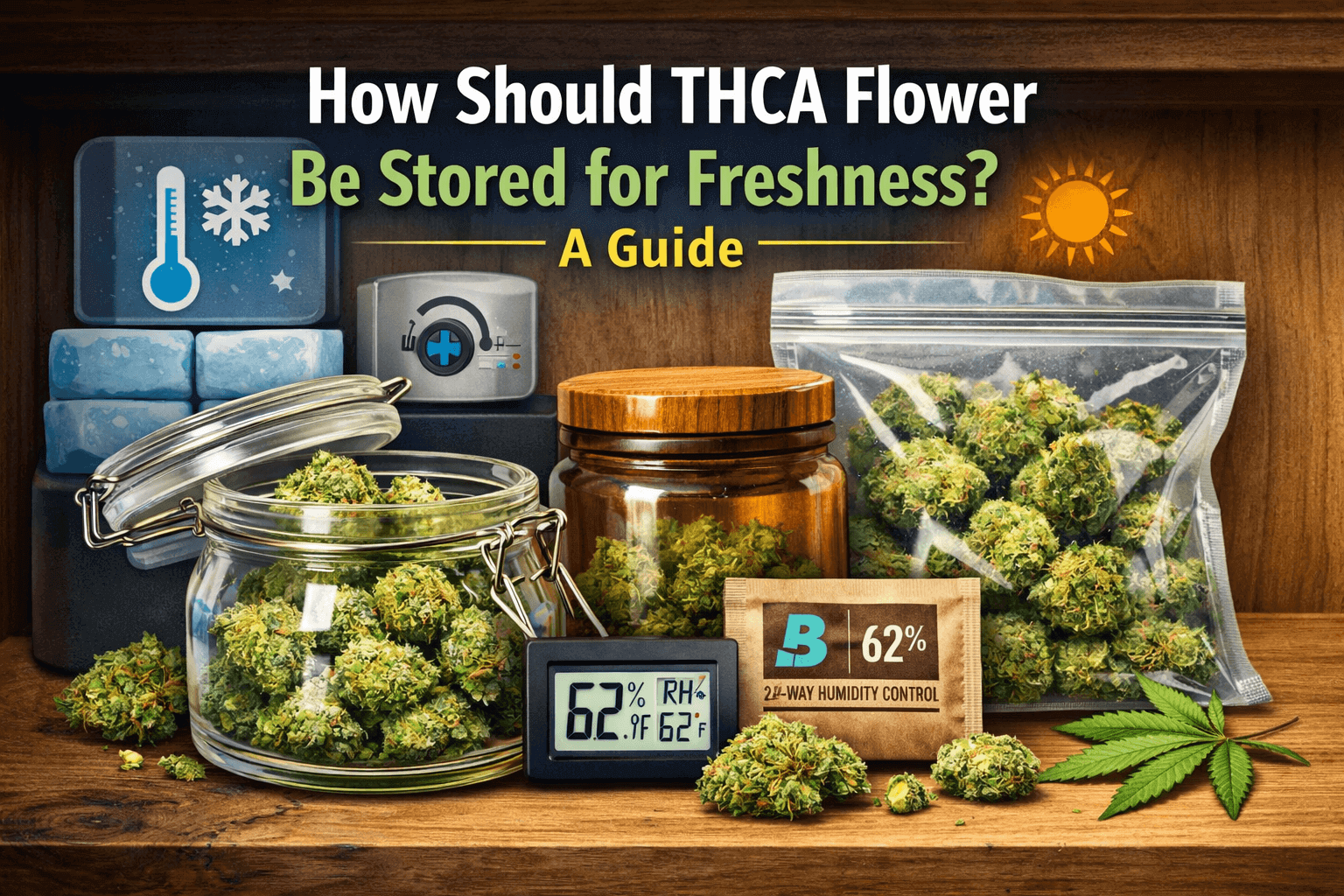
THC-A flower needs proper care to stay fresh and potent. Light, heat, air, and moisture can break down the cannabinoids and terpenes that give the flower its effects and flavor. Without the right storage methods, THC-A flower can lose its strength and quality in just a few weeks.
THC-A flower should be stored in airtight glass containers, kept in a cool and dark place, with humidity levels between 55% and 62% to maintain freshness and potency. The way someone stores their flowers makes a big difference in how long it lasts. Glass jars work better than plastic bags because they don’t affect the flowers’ taste or smell. Temperature control matters too, as heat speeds up the breakdown of THC-A.
Many people make simple mistakes that ruin their flowers without realizing it. This article covers the best ways to store THC-A flower and explains which common errors to avoid. Readers will learn how to protect their product and keep it fresh for months.
Best Practices for Storing THC-A Flower
Proper storage depends on four main factors: temperature, light, humidity, and container selection. Each element plays a specific role in preserving the cannabinoids and terpenes that give THC-A flower its effects and aroma.
Impact of Light Exposure
Light breaks down cannabinoids and terpenes through a process called photodegradation. UV rays from sunlight cause the fastest damage, but even indoor lighting affects flower quality over time.
Direct sunlight can destroy THC-A in just a few weeks. The Puffy thc a flower collection requires protection from all light sources to maintain quality. Amber or dark-colored glass jars block most harmful light waves better than clear containers.
Store flowers in a dark location such as a drawer, cabinet, or closet. If clear containers are the only option, wrap them in a dark cloth or bag. Complete darkness preserves the most potency and flavor.
Even brief exposure to bright light during daily access adds up over weeks and months. Minimize the time jars stay open or exposed to room lighting.
Ideal Storage Temperatures
THC-A flower stays fresh longest between 60°F and 70°F. Higher temperatures speed up the conversion of THC-A to THC through a process called decarboxylation. This process reduces potency and changes the flower’s chemical profile.
Temperatures above 77°F can dry out the buds and degrade cannabinoids faster. Heat also causes terpenes to evaporate, which removes flavor and aroma. Cold storage below 60°F slows down degradation, but freezing creates problems of its own.
Freezers damage trichomes because the cold makes them brittle and easy to break off. Refrigerators create excess moisture that leads to mold growth. A cool, dark closet or cabinet maintains stable temperatures without these risks.
Temperature swings harm flower quality more than steady warmth. Fluctuations cause moisture to move in and out of the buds, which creates an environment for mold and mildew.
Humidity Control Methods
Relative humidity between 58% and 62% prevents mold while keeping buds from drying out. Too much moisture grows mold and mildew, which ruins flower and poses health risks.
Humidity below 55% dries out terpenes and makes buds crumble into dust. The flower becomes harsh to smoke and loses much of its aroma. Dried-out buds also burn faster and produce harsher smoke.
Humidity packs maintain specific moisture levels inside storage containers. These two-way packs either add or remove moisture as needed to hold steady humidity. They last several months before replacement becomes necessary.
Place one humidity pack in each storage jar based on the container size. Most manufacturers print size guidelines on the package. Check humidity packs monthly and replace them as they harden or dry out.
Digital hygrometers measure humidity levels inside storage containers. These small devices provide accurate readings and help monitor storage conditions. Place them inside larger storage jars for continuous monitoring.
Proper Airflow and Container Choice
Airtight glass jars provide the best storage for THC-A flower. Glass does not absorb odors or oils and creates a perfect seal against air and moisture. Mason jars with rubber seals work well for home storage.
Plastic containers and bags allow air to pass through over time. This slow air exchange dries out flower and exposes it to oxygen. Metal containers can affect taste and may react with the flower’s natural oils.
Vacuum-sealed bags remove air completely and extend freshness for long-term storage. However, vacuum pressure can crush delicate trichomes. Use this method only for flower stored for several months or longer.
Fill containers about 75% full to leave some air space. Completely packed jars create pressure on the buds, which damages trichomes. Too much empty space allows excess air that speeds up degradation.
Open storage jars briefly and infrequently to maintain stable conditions. Each time the container opens, new air and moisture enter. Remove only the amount needed and close the jar immediately.
Separate different strains into individual containers to preserve each one’s unique aroma and flavor profile. Mixing strains blends their terpenes and makes them taste similar.
Common Storage Mistakes and How to Avoid Them
Poor storage practices can destroy THCA flower’s quality within days or weeks. The most frequent errors involve exposure to light, air, moisture, and temperature swings, which all speed up degradation and create conditions for mold growth.
Risks of Improper Storage Conditions
Plastic bags rank among the worst storage choices for THCA flower. These bags allow air to seep through, fail to block light, and create static electricity that strips trichomes from the buds. The static pulls valuable cannabinoids and terpenes away from the flower surface.
Clear glass jars present another problem because they let light penetrate and break down THCA. Direct sunlight or even indoor lighting can convert THCA into THC and eventually degrade it into CBN, which changes the flower’s effects. This light exposure also destroys the terpenes that give cannabis its smell and flavor.
Temperature mistakes happen often in home storage. Some people store THCA flower in refrigerators or freezers, but this creates moisture problems. The cold environment causes condensation to form on the buds each time someone opens the container. Others leave their flower near heat sources like radiators, ovens, or sunny windowsills, which speeds up the drying process and cannabinoid breakdown.
Humidity levels outside the 59-63% range cause serious issues. Too much moisture lets mold and bacteria thrive on the flower. Too little moisture makes the buds crumble into dust and harsh smoke.
How Mold and Degradation Affect Freshness
Mold appears as white, gray, or black fuzzy spots on cannabis buds. It develops in environments with excess humidity and poor air circulation. Mold spores can cause respiratory problems and allergic reactions, which makes the flower unsafe to consume. The musty smell from moldy flower is unmistakable and indicates the entire batch needs disposal.
Cannabinoid degradation happens gradually but becomes noticeable over time. THCA breaks down into other compounds through exposure to oxygen, light, and heat. The flower loses its potency and therapeutic benefits as this process continues. Terpenes evaporate even faster than cannabinoids degrade, so the aroma and flavor disappear first.
Oxidation turns fresh green buds into brown, brittle material. This chemical reaction occurs as air molecules interact with the plant compounds. The flower becomes harsh to smoke and loses most of its desirable qualities.
Solutions for Long-Term Freshness
Airtight glass jars with dark tint or opaque coating provide the best storage solution. Mason jars work well, but amber or violet glass blocks more light. The container size should match the amount of flower to minimize air space inside.
Humidity control packs maintain the ideal moisture level automatically. These two-way packs either release or absorb moisture as needed to keep the environment stable at 62%. Replace them every few months or as the manufacturer recommends.
Store THCA flower in a cool, dark place like a closet or cabinet away from windows and appliances. The ideal temperature stays between 60-70°F with minimal fluctuation. A dedicated storage box or drawer helps protect the jars from accidental light exposure.
Label each container with the strain name and date to track how long the flower has been stored. Most properly stored THCA flower stays fresh for 6-12 months, though it remains safe to use beyond that timeframe. Check the flower monthly for any signs of mold, excessive dryness, or loss of aroma.
Vacuum-sealed bags offer an alternative for long-term storage but require careful handling. Remove as much air as possible before sealing, then store the bags in a dark container or box. However, avoid frequent opening and resealing, as this defeats the purpose of vacuum sealing.
Conclusion
Proper storage protects THC-A flower from light, heat, air, and moisture. Store it in airtight glass containers and keep them in cool, dark places. Maintain humidity levels between 55% and 62% with humidity packs. These simple steps preserve potency, flavor, and aroma for months. Users who follow these storage methods will notice their flower stays fresh and effective much longer than improperly stored products.

Chase Ortiz is part of the team at PaigeSimple, where he takes care of all the advertising requests. With a sharp eye for detail, Chase makes sure every advertising opportunity is handled smoothly, helping the site grow and reach more people. His ability to manage these tasks efficiently makes him an important part of the team.