
If you’ve ever lost a deal because you forgot to follow up, or spent twenty minutes digging through your inbox to find “that one client’s details,” you’ve already met the problem a CRM solves. A good CRM doesn’t just store contacts — it gives your business structure, memory, and rhythm. It reminds you who to call, where each deal stands, and what your customers care about.
And yet, choosing the right CRM can feel like walking into a car dealership with no idea what you need — flashy dashboards, confusing plans, and features you’ll never use. So in this article, I’ve gone through eight popular platforms — SendPulse, Freshsales, Brevo, Mailchimp, Salesforce CRM, CRMOne and Constant Contact, to help you figure out which one actually fits the way you work.
You’ll notice each has its own “personality.” Some are all about automation. Others are designed for hands-on sales teams. But only one — spoiler alert, it’s SendPulse — manages to bring everything together in a way that feels natural, human, and surprisingly affordable.
SendPulse
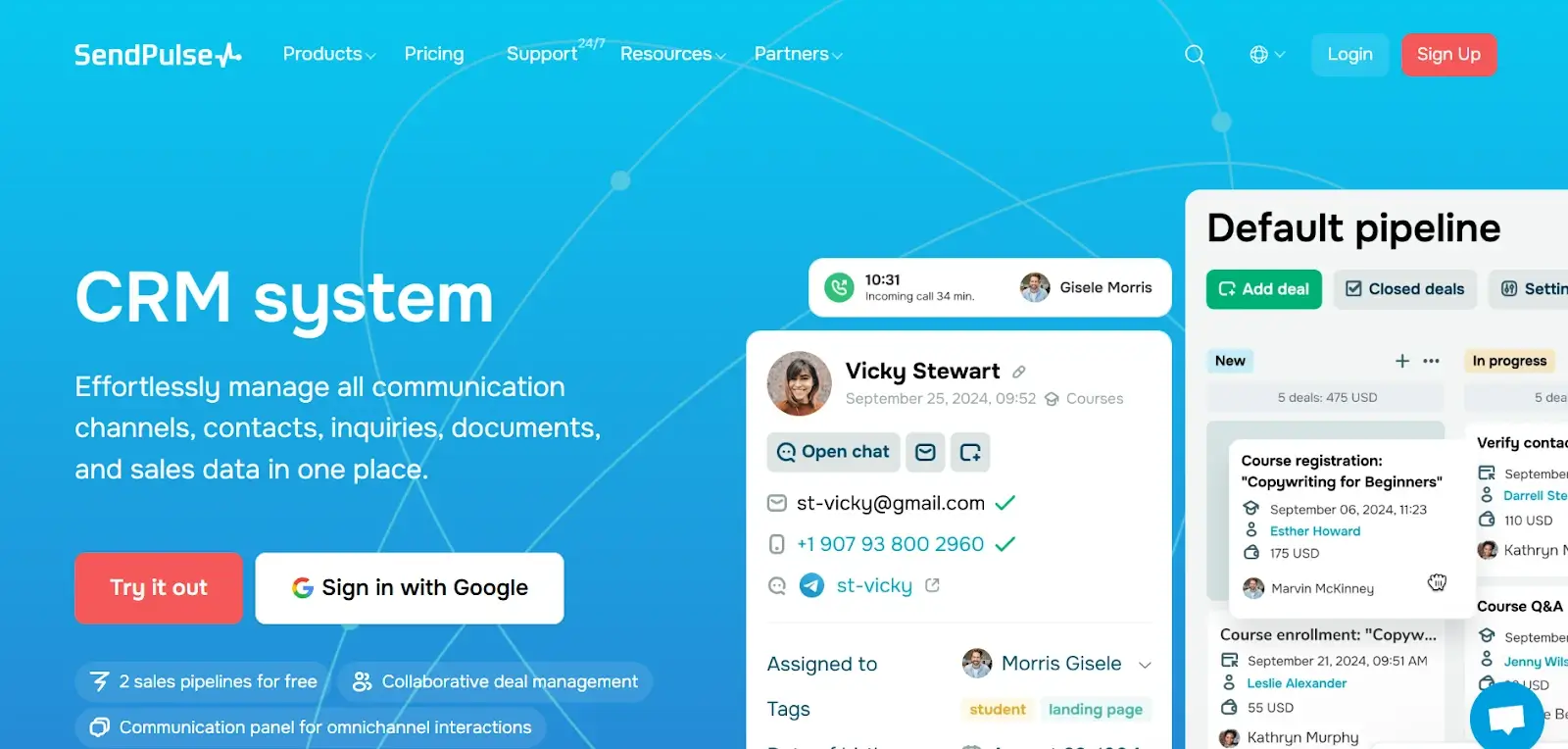
SendPulse is an all-in-one marketing and sales automation platform designed for businesses that want simplicity without sacrificing depth. It combines CRM, email marketing, chatbots, and multichannel automation in one environment — so teams can manage leads, communicate with customers, and close deals from a single dashboard. SendPulse is especially well-suited for small and mid-sized companies that want to unify marketing and sales without juggling multiple tools.
Key Features
- Contact & Account Management: SendPulse centralizes all customer data — emails, calls, messages, and notes — in one place. You can create custom fields, categorize leads, and track every interaction automatically. Each contact has a detailed timeline, helping teams understand customer behavior and respond in context.
- Pipeline & Deal Management:
The CRM uses visual sales pipelines that allow teams to track opportunities at a glance. Deals move seamlessly between stages using a drag-and-drop interface, ensuring sales reps stay focused on closing conversations from WhatsApp and other channels rather than manual admin work. - Task & Activity Management:
Built-in task boards make it easy to assign follow-ups, set reminders, and coordinate next steps across the team. Managers can monitor workloads, response times, and sales activity from a single view, helping keep WhatsApp-driven sales conversations moving forward on time. - Communication & Tracking:
Every customer interaction — from WhatsApp chatbot messages and live chats to emails — is logged automatically in the CRM. Teams can manage multi-channel communication from one dashboard, view full conversation histories, and ensure no lead or inquiry goes unanswered. - Sales Analytics & Forecasting:
SendPulse delivers real-time insights into deal values, pipeline health, revenue forecasts, and conversion rates. Clear, actionable reports help sales teams identify trends, optimize WhatsApp campaigns, and plan with greater confidence.
- Security & Compliance: Two-factor authentication, encrypted backups, and full GDPR compliance protect user and customer data.
- Support & Training: SendPulse offers 24/7 live chat support, onboarding assistance, a robust Help Center, and an active community where users share strategies and best practices.
Pricing
SendPulse offers a free plan that includes the account owner and up to four team members — giving small teams a complete working CRM with access to deal pipelines, contact management, and task features. It also provides you with 2 sales pipelines/boards, and 1 GB storage, 5 automation flows, 1 event, and 50 elements in Automation 360. The cheapest paid plan for $8/month expands capabilities with 8 flows, 5 events, 50 Automation 360 elements, 2 boards, 3 GB storage, 1 email inbox, and 8 saved segments. Pricing remains transparent and affordable compared to most competitors, making it one of the best-value all-in-one CRMs available.
Freshsales
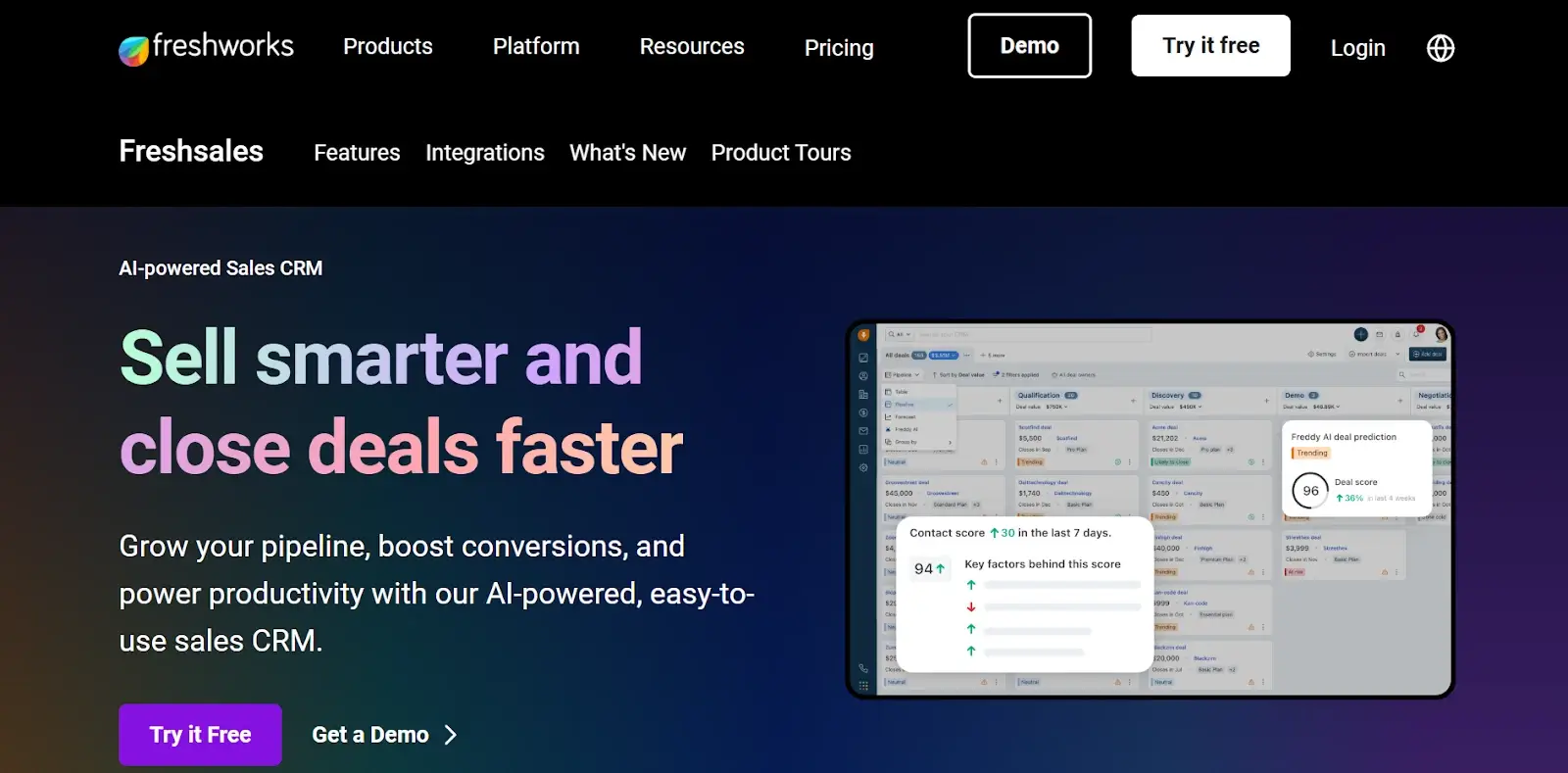
Freshsales (part of the Freshworks ecosystem) is built for companies that live and breathe sales. It’s a modern, lightweight CRM that focuses on helping teams convert leads faster with automation and clear visibility into every deal. The interface is sleek, intuitive, and designed to reduce the everyday noise that slows down reps. For growing businesses, it strikes a balance between simplicity and capability — everything you need, right where you expect it.
Key Features
- Lead and Deal Management: Freshsales organizes prospects through visual pipelines that show exactly where every deal stands. Drag-and-drop stages keep sales reps focused on progress instead of paperwork.
- Contact Management: The CRM automatically enriches contact data from emails and web forms, creating detailed profiles with activities, notes, and past communications.
- Email and Communication Tracking: Track email opens, clicks, and replies directly in the CRM. Freshsales also integrates with your calendar to log meetings automatically.
- Task and Activity Scheduling: Set reminders, assign tasks, and manage follow-ups without switching apps. Managers can track team activity from one dashboard.
- AI-Assisted Forecasting: The built-in Freddy AI engine analyzes historical data to predict closing probabilities and potential revenue. It helps prioritize the right leads and stay realistic about upcoming targets.
- Reports and Dashboards: Customizable analytics let teams measure performance, track conversion rates, and spot bottlenecks quickly.
- Integrations and Automation: Freshsales works seamlessly with email clients, chat tools, and marketing apps. Automated workflows simplify lead assignments and nurture processes.
Pricing
Freshsales offers a 21-day free trial (no credit card required). The Growth plan, its cheapest paid option, adds AI-based insights, advanced reporting, and workflow automation for $18/user/month.
Brevo
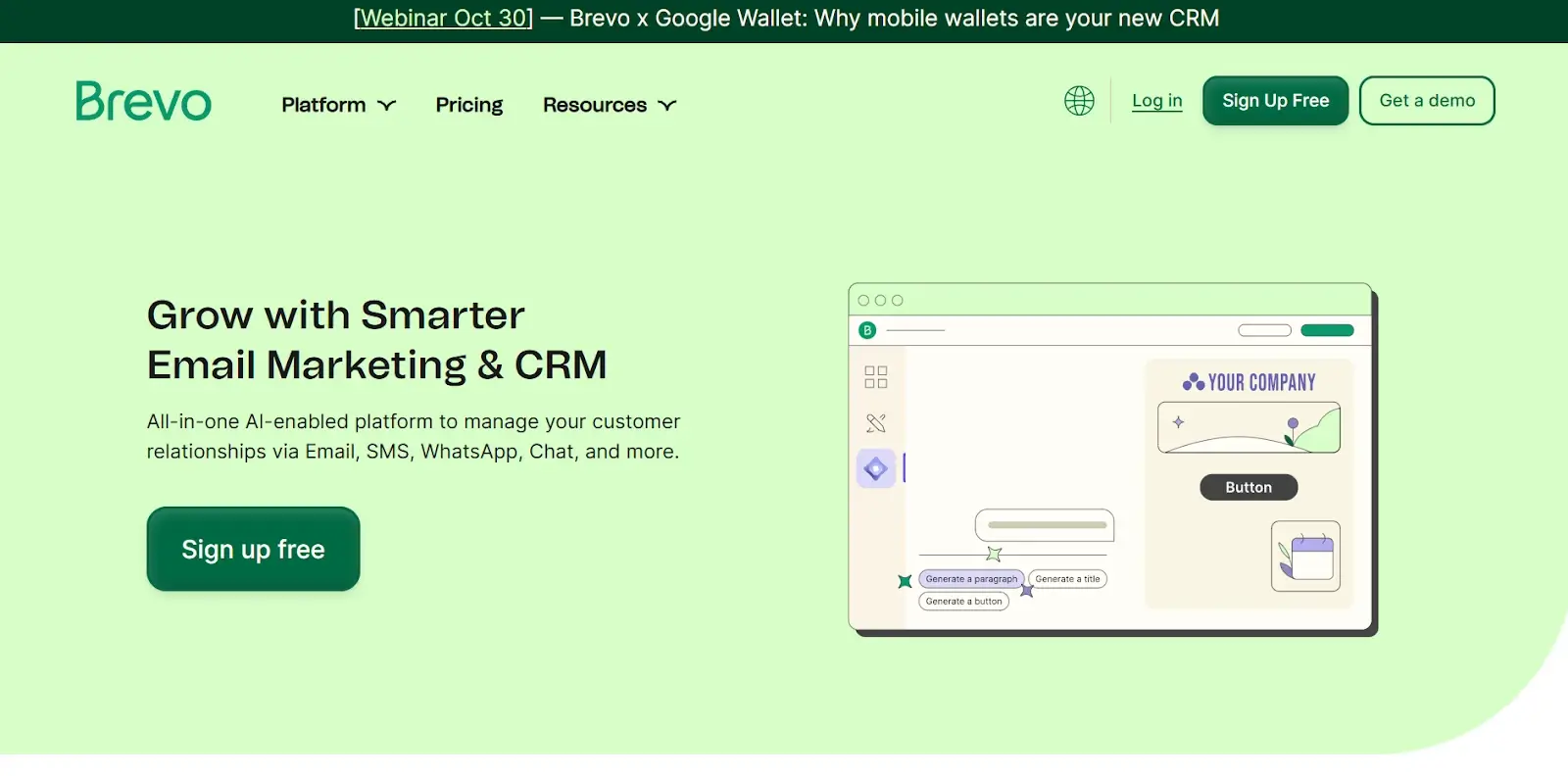
Brevo, formerly known as Sendinblue, has grown from an email marketing tool into a complete customer engagement and CRM platform. It’s built for businesses that want to manage their marketing and sales in one place — without feeling like they’re using two separate systems. Brevo’s strength lies in its simplicity: everything you need to capture, nurture, and convert leads is right at your fingertips, whether you’re sending campaigns, tracking conversations, or managing deals.
Key Features
- Contact Management: Brevo keeps all your customer data in one central database. You can add custom attributes, segment your contacts, and tag leads based on source or behavior. Every contact profile includes an interaction timeline, so teams always have full context before reaching out.
- Deal & Pipeline Tracking: The CRM module provides visual pipelines that let you monitor deals by stage, assign them to team members, and set priorities. It’s easy to spot stalled opportunities and see which deals are most likely to close.
- Task & Follow-Up Management: Tasks can be created directly from contact records or deals, ensuring no lead falls through the cracks.
- Multichannel Communication: Brevo integrates email, chat, and SMS in one interface, so you can communicate with customers through their preferred channel and track every exchange.
- Automation Tools: Build automated workflows to send follow-ups, assign leads, or move deals between stages based on activity triggers.
- Data Security & Compliance: Brevo is fully GDPR-compliant and uses robust encryption to keep customer data safe.
Pricing
Brevo offers a free plan that includes 50 open deals and 1 pipeline. This makes it an excellent starting point for small businesses or teams testing their first CRM system. The Starter plan, its most affordable paid option, unlocks sales automation, unlimited deals and pipelines, unlimited connected calendars and mailboxes for $9/month. For marketing-heavy teams, higher plans include unlimited emails, SMS campaigns, and integrations — allowing users to grow their CRM capabilities as their business scales.
Mailchimp
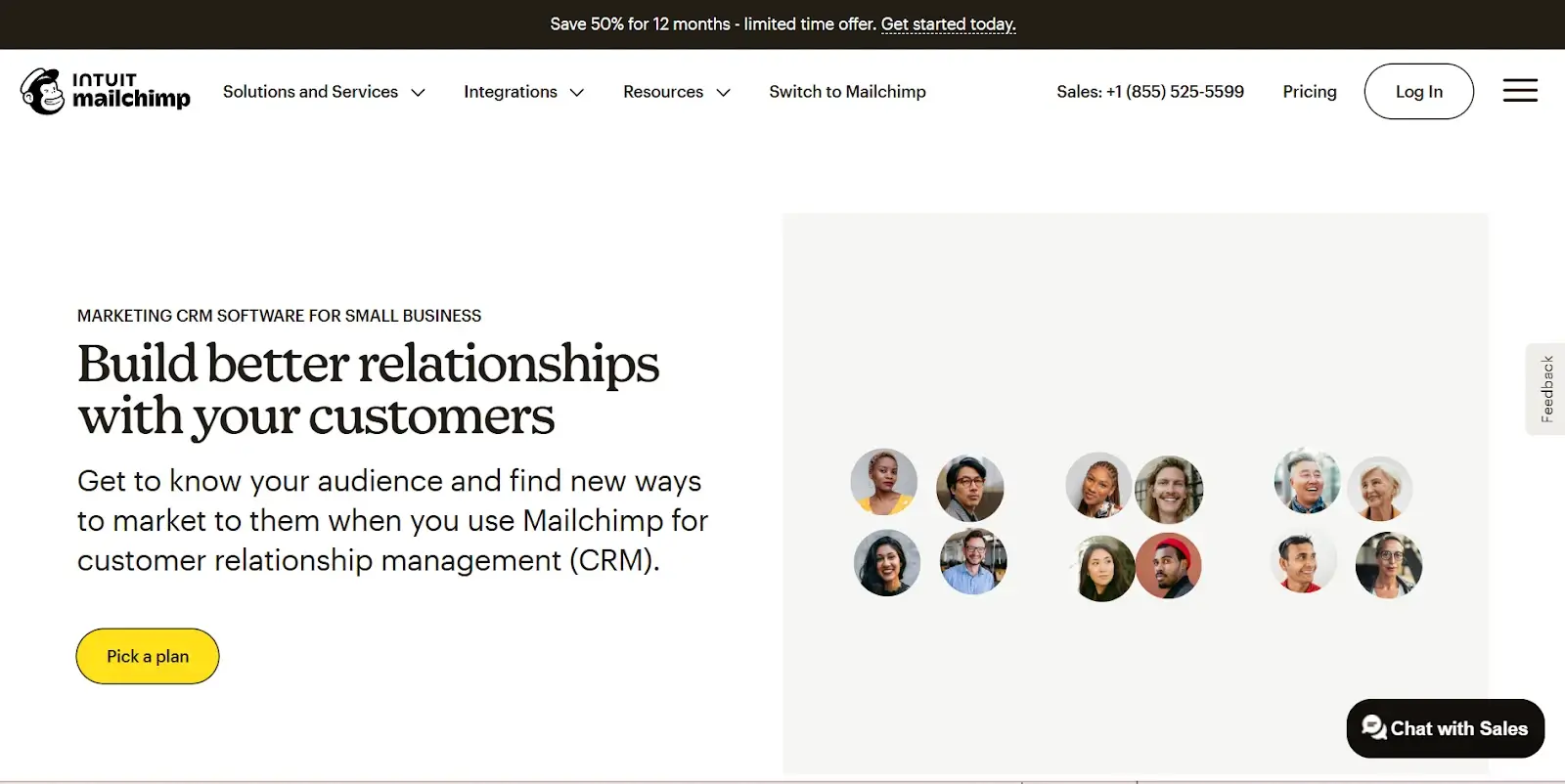
Mailchimp is one of the most recognizable names in digital marketing — best known for its user-friendly email platform that helps small businesses stay in touch with their audiences. Over time, it has evolved into a marketing hub that also includes light CRM capabilities. For companies that want a strong marketing foundation with some contact management features, Mailchimp delivers a well-rounded experience that feels approachable and creative.
Key Features
- Contact Management: Mailchimp organizes customer data through what it calls “Audiences.” Each audience can be segmented with tags, interests, and behaviors, giving you control over who receives which message. It’s simple enough for beginners yet flexible for growing marketing teams.
- Marketing Automation: The platform shines in automation. You can set up welcome sequences, re-engagement campaigns, and drip workflows that nurture leads automatically. Everything is visual, so even non-technical users can map out customer journeys.
- Email and Campaign Tools: Mailchimp’s drag-and-drop email builder remains one of the best in the industry. You can personalize messages, test variations, and measure performance easily.
- Integrations: Mailchimp connects with eCommerce platforms, social media tools, and hundreds of third-party apps, making it easy to sync your marketing and sales data.
- Security and Reliability: The platform uses TLS encryption and two-factor authentication to protect user accounts and customer data.
Pricing
Mailchimp’s CRM tools are built into its marketing plans. The free plan offers basic contact management, simple automations, and up to 500 contacts — a good entry point for very small businesses. The Essentials plan, Mailchimp’s most affordable paid tier costing $13/month, adds advanced email templates, A/B testing, and expanded automation options.
Salesforce CRM
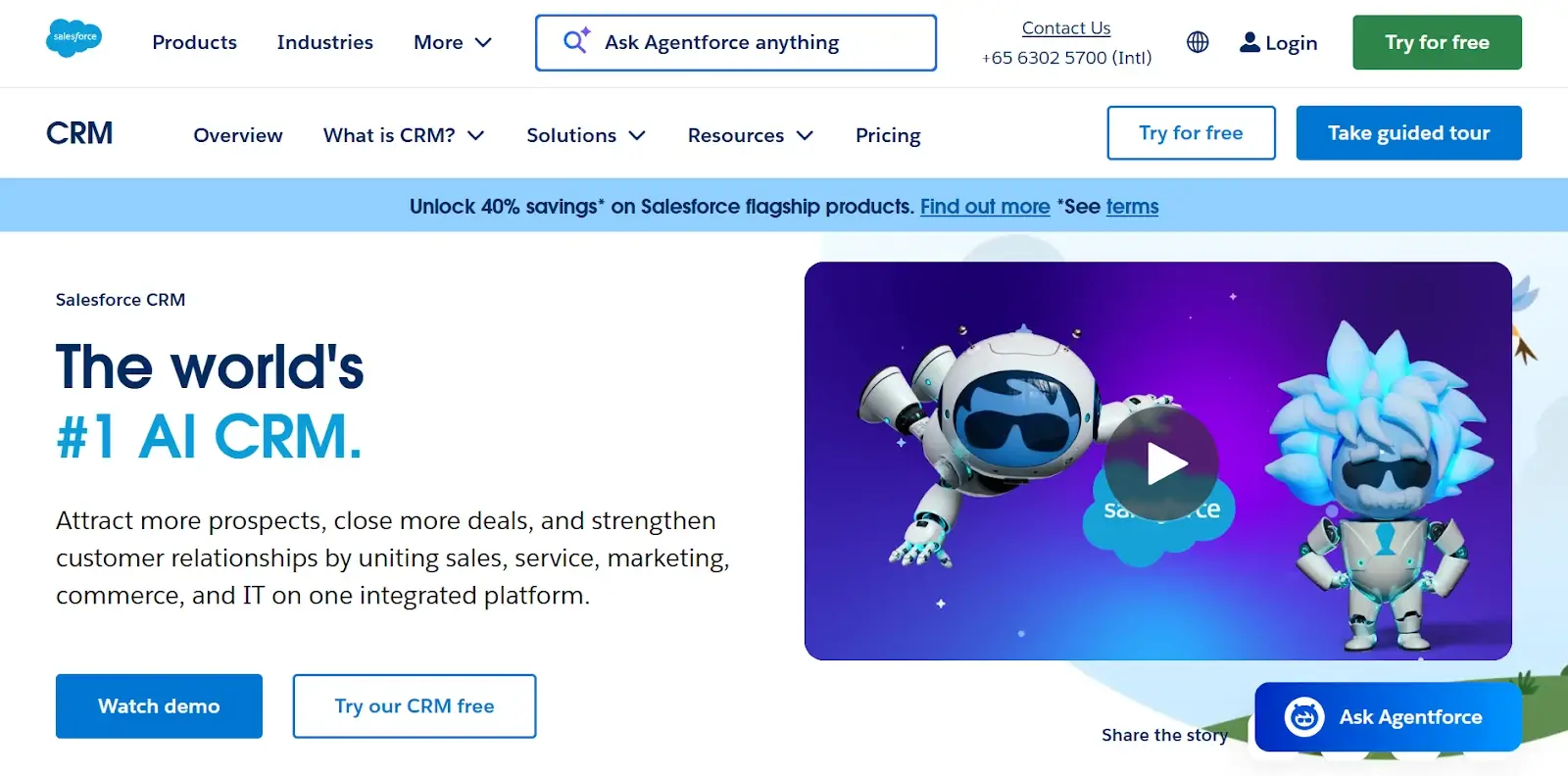
Salesforce CRM is one of the most established tools in the industry, designed for businesses that need a deeply customizable and scalable solution. It’s built to handle everything from sales tracking and marketing automation to customer service and analytics — all within one ecosystem. While it’s powerful enough for large enterprises, smaller teams can also benefit from its modular setup, which lets users start simple and add more functionality as they grow.
Key Features
- Comprehensive Contact Management: Salesforce centralizes every customer interaction across departments — sales, support, and marketing. Each contact record stores communication history, activity logs, and deal information, giving teams a 360-degree view of their relationships.
- Lead and Opportunity Management: The platform excels at managing leads through detailed pipelines. You can set up multiple stages, automate scoring, and track conversions with precision.
- Workflow Automation: Salesforce’s automation engine lets you create custom workflows for follow-ups, notifications, and approvals. Routine tasks practically run themselves.
- Reports and Dashboards: With robust analytics, users can build custom dashboards to visualize performance, forecast revenue, and identify trends in real time.
- AppExchange Marketplace: Thousands of integrations and extensions are available, making it possible to connect Salesforce with nearly any tool in your tech stack.
- Security and Compliance: Enterprise-grade security, regular audits, and strong compliance features make it suitable for industries with strict data requirements.
Pricing
Salesforce offers a 30-day free trial so teams can explore its core CRM capabilities before subscribing. The Essentials plan, its entry-level paid option, costs $25/user/month and includes lead, account, contact, and opportunity management, built-in sales flows and lead routing, and connected Slack conversations. Salesforce’s pricing is higher than many competitors, but the flexibility and scalability justify the investment for companies looking for a long-term, enterprise-grade CRM.
CRMOne
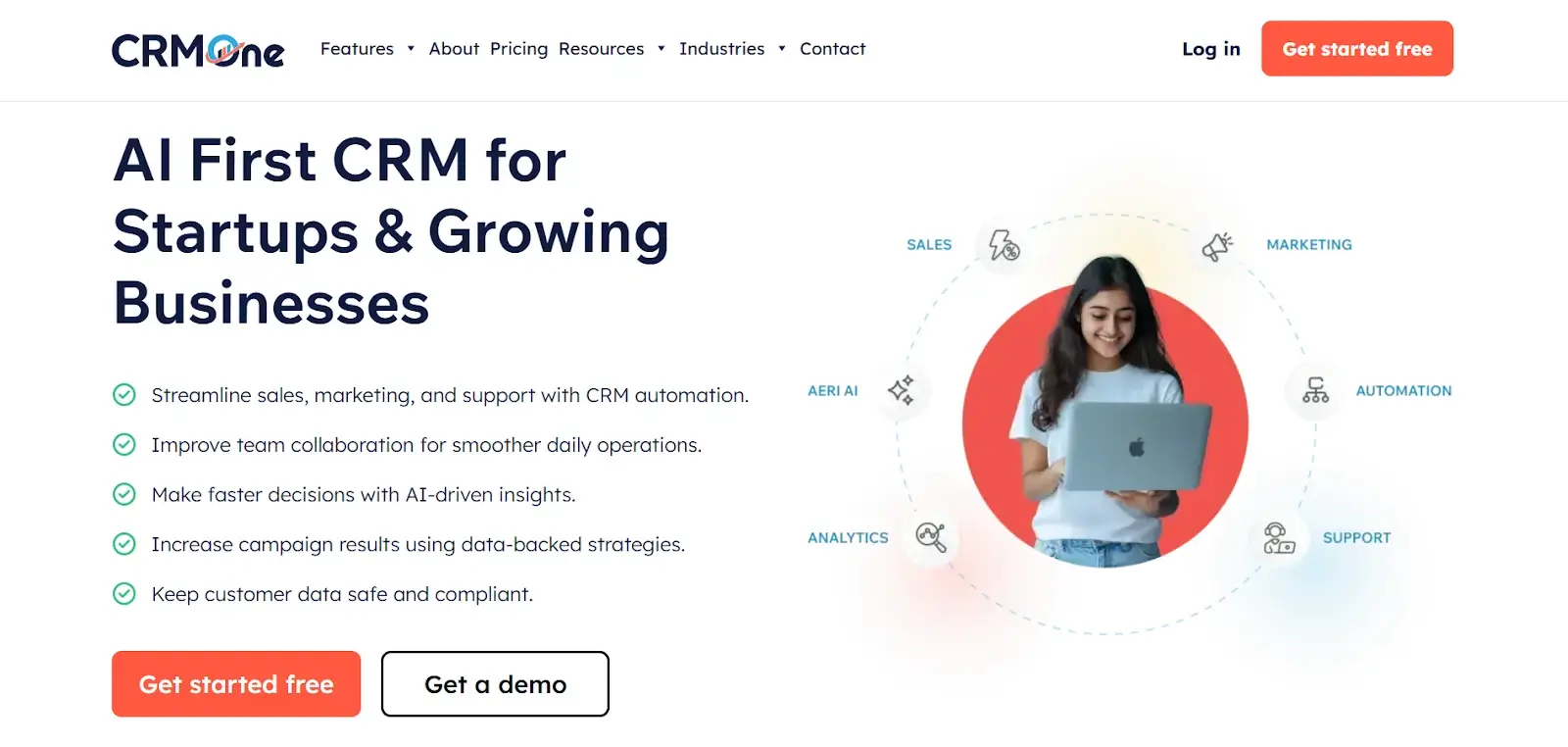
CRMOne is designed to simplify customer management for teams that need an all-around tool without unnecessary complexity. It offers a straightforward interface that focuses on what really matters — tracking leads, managing deals, and improving communication between teams. CRMOne is particularly popular among small to medium-sized businesses that want structure and visibility in their customer pipelines without the learning curve that comes with heavier systems.
Key Features
- Lead and Deal Management: CRMOne allows users to create and track deals across multiple pipelines. Visual boards help you monitor progress and identify which leads need follow-up.
- Contact Management: Every customer record stores essential information, including contact details, deal history, and communication logs, ensuring your team always has context before reaching out.
- Task and Activity Tracking: You can assign tasks, set reminders, and track their completion to maintain consistency in sales workflows.
- Email and Communication Tools: CRMOne integrates directly with major email providers, letting you send, receive, and log emails from within the CRM. This helps maintain complete communication history per client.
- Automation: Simple workflow automation tools handle repetitive actions, such as assigning leads or updating deal stages.
- Reports and Dashboards: Built-in analytics give an overview of your team’s activities, win rates, and conversion performance, helping managers identify areas for improvement.
- Integrations: Connect CRMOne to marketing, accounting, or customer service tools to keep data synchronized across departments.
- Security: All data is stored securely with role-based access and encryption options, providing control over who can view or edit sensitive information.
Pricing
CRMOne offers a 14-day free trial, allowing users to explore its core features without commitment. Its Basic plan, the most affordable paid tier, costs $18/month per user and includes access to deal pipeline, tasks & appointment scheduler, 1 workflow, and 5,000 actions. The pricing structure is transparent and aimed at businesses seeking functionality without high subscription costs.
Constant Contact
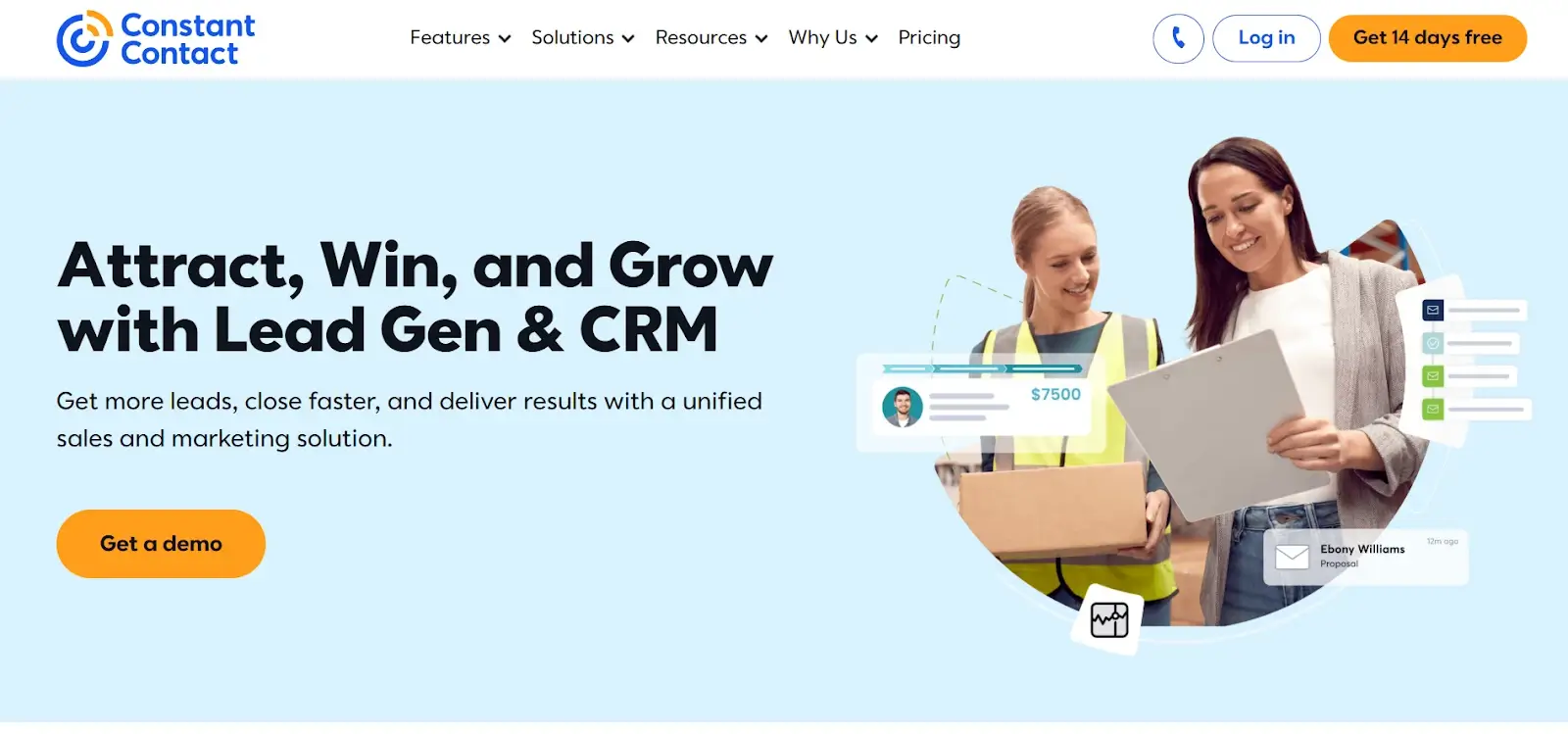
Constant Contact has long been known as a trusted name in email marketing, and in recent years, it’s expanded into CRM functionality that brings contact management and campaign tracking together. The platform is ideal for small businesses and marketing teams that want an easy way to stay connected with customers while tracking engagement and conversions. Its design focuses on clarity — giving users a simple workspace that combines marketing, contact organization, and reporting tools.
Key Features
- Contact Management: Constant Contact lets you store and organize customer information, import contacts from various sources, and use signup forms to grow your database. Segmentation tools make it easy to target groups based on activity or demographics.
- Email and Campaign Management: The drag-and-drop email editor makes it easy to create professional campaigns. Users can set up autoresponders, send newsletters, and track performance metrics like opens and clicks in real time.
- Marketing Automation: Automated follow-up emails and behavior-based triggers ensure consistent engagement with minimal manual effort.
- Reporting and Analytics: The platform provides comprehensive reports showing delivery rates, engagement levels, and campaign ROI. These insights help refine strategies over time.
- Integrations: Constant Contact connects with eCommerce platforms, CRM tools, and social media apps, allowing users to keep customer data and activity synced across channels.
- Security and Compliance: TLS encryption and role-based permissions help protect sensitive data, and the platform supports GDPR compliance for international users.
- Support and Resources: Users get access to extensive tutorials, a helpful knowledge base, and customer service via chat and phone support.
Pricing
Constant Contact does not have a traditional free plan, but it offers a 14-day free trial so users can explore its features before committing. The Lite plan, its entry-level paid tier for $12/month, includes 500 contacts. Higher tiers unlock more sophisticated automation, AI-driven optimization, and multi-channel marketing support — making it a strong option for teams that rely heavily on email and digital engagement.
Final Thoughts
The best CRM isn’t just the one with the most features — it’s the one that fits how you work. Each of these platforms has its strengths. Freshsales stands out for sales-focused teams that rely on pipelines and forecasts. Brevo bridges marketing and CRM for those who want a smooth transition from campaigns to customer management. Mailchimp is perfect for content-driven businesses, while Salesforce serves larger enterprises that need deep customization and data power. CRMOne and Constant Contact keep things simple and approachable for smaller teams getting started.
But SendPulse stands out as the most balanced option overall. It combines marketing automation, CRM, chatbots, and communication tracking in one easy-to-use system. The free plan is generous enough to get real work done, and the paid plans grow with your team. It’s straightforward, secure, and built to help small and mid-sized businesses work smarter — not harder.

Chase Ortiz is part of the team at PaigeSimple, where he takes care of all the advertising requests. With a sharp eye for detail, Chase makes sure every advertising opportunity is handled smoothly, helping the site grow and reach more people. His ability to manage these tasks efficiently makes him an important part of the team.